“Like the moon, our faces change. I look in the mirror and I see myself in a different light today than yesterday.”
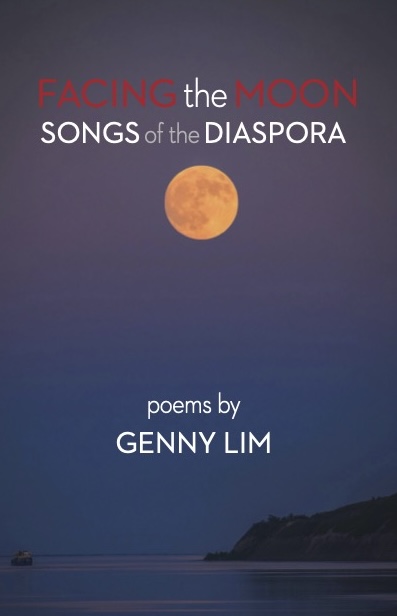
San Francisco Poet Laureate GENNY LIM
turns her gaze to the full moon with this collection of poetry, written for Facing the Moon: Songs of the Diaspora, a multimedia performance created in collaboration with Del Sol Quartet in 2025.
“We are all immigrants
Facing the Moon
Strangers, clasping our children
To our bodies.”
About the Author
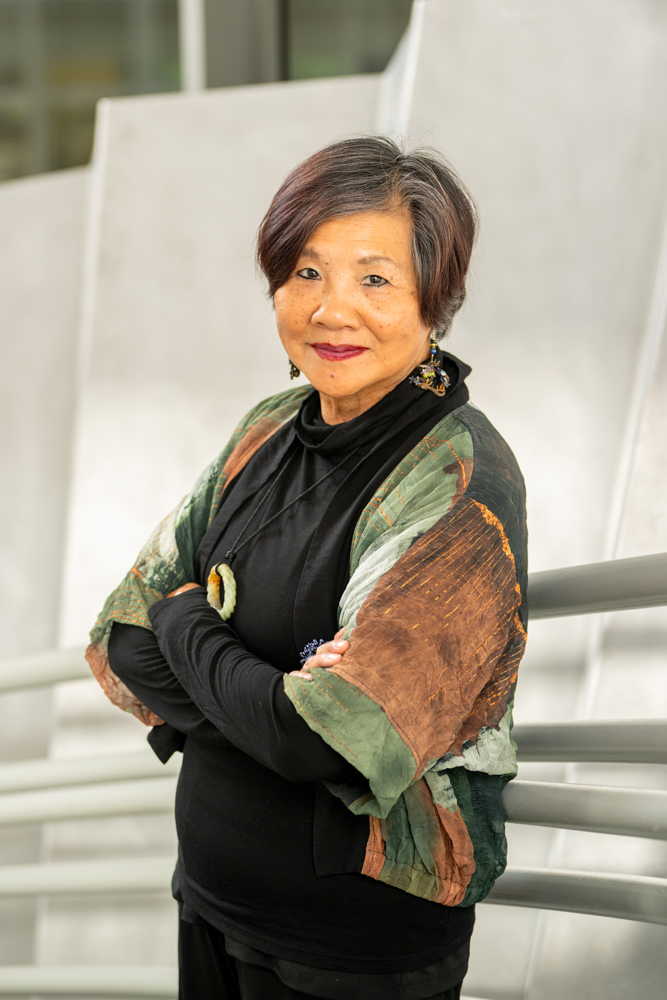
Genny Lim is the first Chinese American poet to serve as San Francisco’s Poet Laureate. Former San Francisco Arts Commissioner and SF Jazz Poet Laureate, she has impacted the artistic community as poet, playwright, performer, teacher, and collaborator. She is the author of five poetry collections and an anthology of Senior Asian American memories. Her award-winning play Paper Angels, set at the Angel Island immigration barracks, was the first Asian American play to air on PBS’s American Playhouse and was produced throughout the U.S., Canada, and China. She is notably co-author of Island: Poetry and History of Chinese Immigrants on Angel Island.
For additional information about the author, please visit gennylim.ddns.net
“Genny’s poetry offers a directness and clarity that cuts right to the core of my being. Through her words, I give voice and expression to my deep-rooted emotions involving family, legacy, and trauma—subjects that have invaded my psyche of late as I have delved deeper into my own family’s history and that have served as fertile source material for many of my most recent projects.”
— Vivian Fung, composer
“The poems of Genny Lim, written for the Songs of the Diaspora Project, carry profound empathy for and deep understanding of the immigrant experience. They have inspired me to reflect on my own nomadic journey and the stories of my immigrant ancestors through my compositions.”
— Meilina Tsui, composer
“The image of bone marrow comes up when I think of Genny’s poetry; essential, generative, and going straight to the core of human struggle and transcendence. Her poems became bridges to a shared ancestral past, inspiring music rooted in genetic memory but also cast towards a future of new possibilities.”
— Theresa Wong, composer